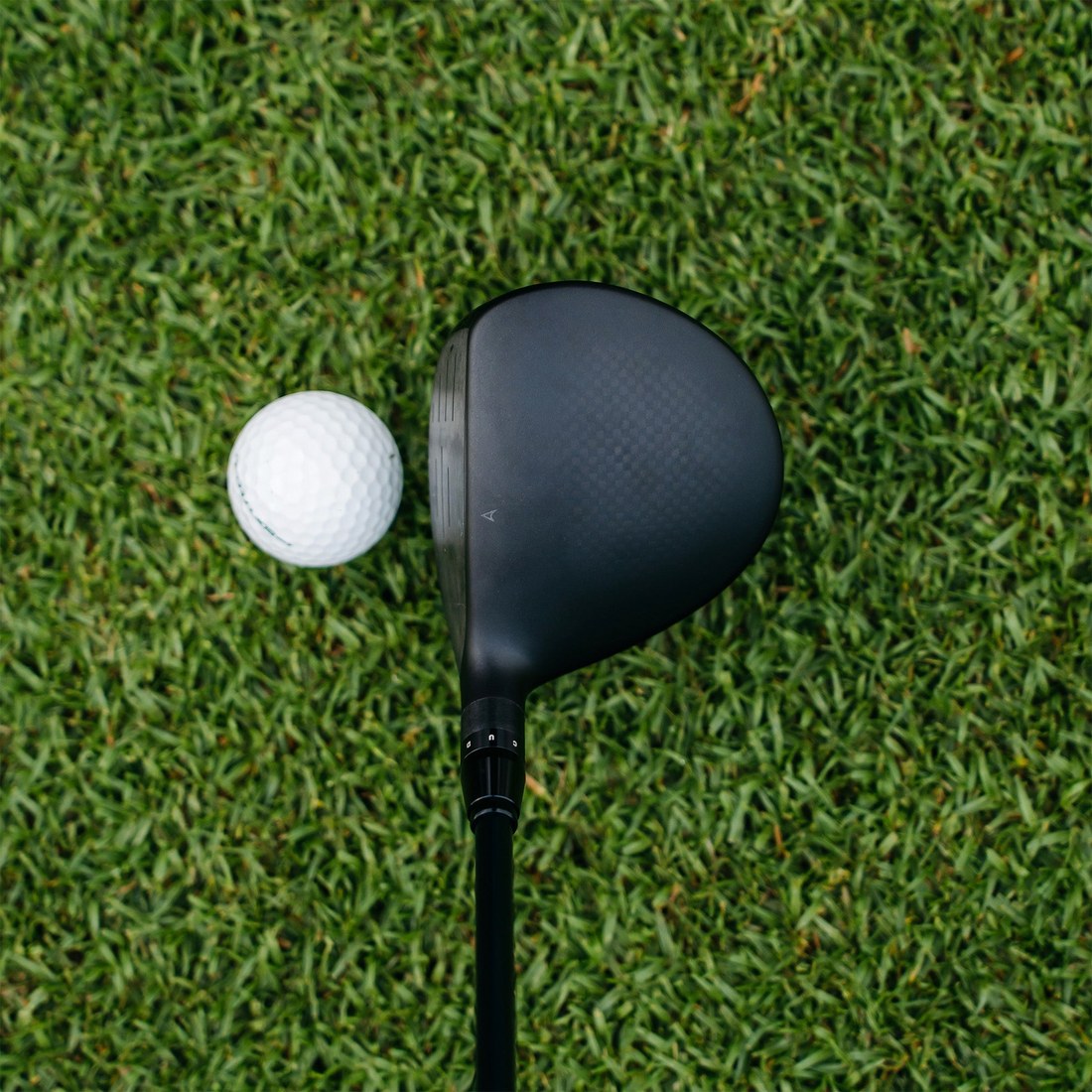
Takomo built the Ignis D2 to keep developing golfers in play, and it does that better than most. In a head-to-head 3-wood test it finished as the most playable club in the field. It also finished as the shortest.
What's new
The Ignis D2 arrived in May 2026 in three lofts: 15 degrees for the 3-wood, 18 for the 5-wood and 21 for the 7-wood. Takomo pairs a heat-treated Hyper 17-4 stainless body with a carbon crown and a variable thickness face, and the design aims for a low center of gravity and high MOI.
None of the heads has a draw bias. All three lofts get an adjustable hosel, but only the 3-wood has interchangeable sole weights, while the 5- and 7-woods carry fixed rear weights. A Fujikura Ventus shaft and Lamkin grip are standard, and the price sits below big-brand money, though one review still called it expensive for a direct-to-consumer club.
How it plays
This club hits it straight, and the testing backs that up. In a 3-wood feature test, 93.26 percent of Ignis D2 shots finished in a playable position, the best result in the group, and its shot area was one of the smallest. On our scale it scores 9.2 for forgiveness and 8.6 for accuracy.
Mishits cost very little, with carry and total falling by less than 10 percent on most of them, and one tester described the flight as laser straight. Launch comes easily. Spin runs between 4,500 and 5,000 rpm with smash factor under 1.40, which goes a long way to explaining why the ball stops short.
Where it lacks
Distance suffers for all that stability. In the same test that rated it most playable, the 3-wood came last in carry at 195.71 yards and in total at 205.91, 14 yards behind the leader, with the highest spin and second-lowest ball speed of the group. Its 7.1 distance score reflects that.
The 3-wood also sounds hollow and a bit tinny at impact, while the 5- and 7-woods feel solid. Players who like to move the ball both ways will find the neutral head stubborn, even if a 7.8 workability score says it is far from locked in place.
“Every 3-wood in that test went farther, and none of them found the fairway as often.”- The Club Stand gear team
Reasons to buy
- Most playable 3-wood in its test, with 93.26 percent of shots finishing in play and one of the tightest dispersions
- Carry and total drop by less than 10 percent on most mishits
- Fujikura Ventus shafts and Lamkin grips come stock at a price under the big brands
Reasons to think twice
- Last in carry and total in its 3-wood test, 14 yards behind the leader
- The 3-wood sounds hollow and a little tinny, though the 5- and 7-woods feel solid
- Built-in straightness makes it hard to curve the ball on purpose
Specs
| Lofts | 15 degrees (3-wood), 18 degrees (5-wood), 21 degrees (7-wood) |
|---|---|
| Head | Heat-treated Hyper 17-4 stainless body, carbon crown, variable thickness face |
| Bias | Neutral, no built-in draw or fade |
| Adjustability | Adjustable hosel; 3-wood has interchangeable sole weights, 5- and 7-woods have fixed rear weights |
| Stock shaft | Fujikura Ventus, Lamkin grips |
| Best for | Developing golfers who want straightness and consistency over raw distance |
More fairway woods we've scored
- Cobra OPTM X Fairway 2026 - 9.2/10. Cobra's OPTM X fairway gets close to driver ball speed off the deck and stays straight on mishits.
- TaylorMade Qi4D Fairway 2026 - 9.0/10. The core Qi4D head won the 2026 fairway wood test by pairing top-two ball speed with tight dispersion.
- Mizuno JPX One Hybrid 2026 - 8.9/10. Mizuno's high-launching hybrid finished first in an eight-club test by hitting the tightest group of the year.
- Tour Edge Exotics Max Hybrid 2026 - 8.8/10. The longest hybrid in an eight-club 2026 test also carries the lowest price in that field.
- PING G440 Max 2025 - 8.8/10. PING's best-selling fairway wood of 2025 leads no single category, yet sits above average in all of them.
- Callaway Elyte Ti Fairway 2025 - 8.7/10. Callaway's titanium Elyte fairway wood pairs a carbon crown with a Step Sole that glides through turf.